
DAMBALLA WEDO (HAITI)
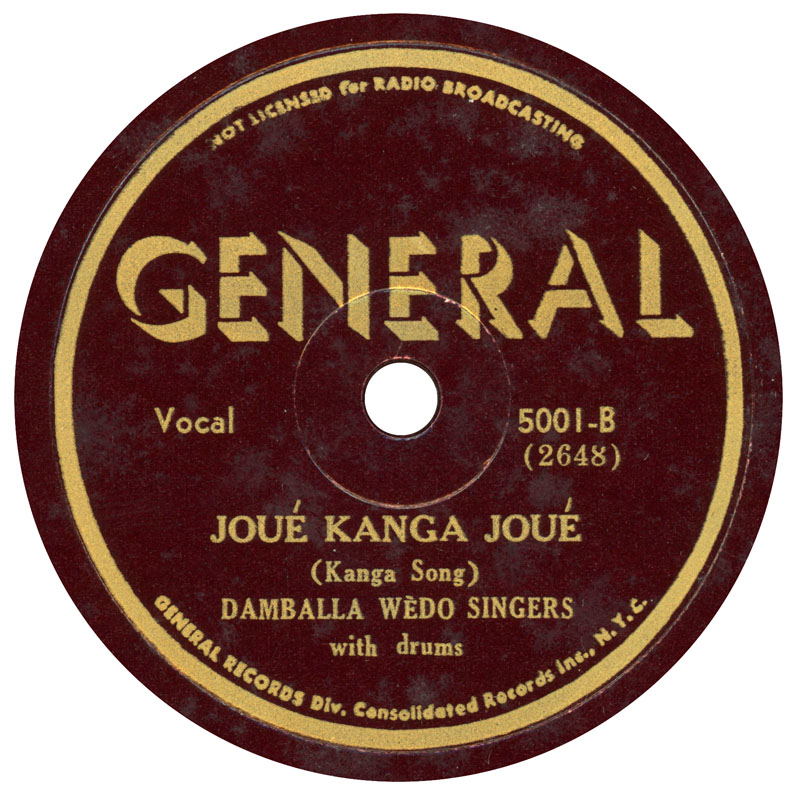
General was a record label based in New York that began in the late 1930s. While the label is best known for it’s 1939 set “New Orleans Memories”, featuring the last recording sessions of Jelly Roll Morton, they also released several sets of ethnographic music. These include the Yaqui (and Tarascan) set by John H. Green heard in the last post, as well as a set of Haitian music, presumably recorded by Harold Courlander. Courlander was the son of a noted American painter and intellectual. In the 1930s he made folkloric field recordings across the American south and eventually became smitten with Haiti. Haiti seems to have been a super hip place to be “into” back in the 1930s through the 50s, with artists like Maya Deren and choreographer Katherine Dunham taking inspiration from the music and Voudoun practices of the island. Courlander made more than 20 trips to Haiti and wrote the classic “The Drum and the Hoe: Life and Lore of the Haitian People.” As if that wasn’t enough, Courlander was general editor of the Ethnic Folkways Library, recording over 30 albums for the esteemed label.
Admittedly, I’m not absolutely positive that Courlander made these recordings for General. Please give me a shout if you have further information. Unfortuntely, these recordings are simply credited to the “Damballa Wedo Singers,” with no indication of the performers’ names. Damballa Wedo is one of the primary spirits in Haitian Vodou, as well as in West African Vodoun, from which the Haitian religion is descended.
General closed shop in 1943 and the masters were subsequently purchased by Commodore. To my knowledge, Commodore did not reissue any of the ethnographic recordings.

 shellachead.com