New York was a hotbed of Greek recording after WWII, when small, independently-owned record labels such as Nina and Kalos Diskos seemed to be thriving. Despite all the recording activity, the famous bouzouki pioneer Ioannis Halikias (aka Jack Gregory) was barely recorded, despite being a well-known fixture on the New York scene. Halikias’ place in history was cemented when he first recorded 4 songs for Columbia in 1932. Those records were very influential and, to some extent, kicked off the bouzouki craze in Greece, despite being recorded in New York. Apparently he was angry with Columbia for the “fine print” in his contract and decided to cut ties with the company. Halikias did not record for some twenty years until he finally made a few recordings for the small Athena label in the mid-1950s. During those intervening years he hung out with various Greek musicians touring the states (one can find snippets on the web of home recordings made during this period, which, unfortunately, the Halikias family refuses to release in full unless they are paid an absurdly high price), and is rumored to have run an underground hashish joint. It’s also been whispered that after he died the police found his closet full of (other people’s) wallets (see comments section). Again, these are unsubstantiated rumors from the “rebetosphere.”
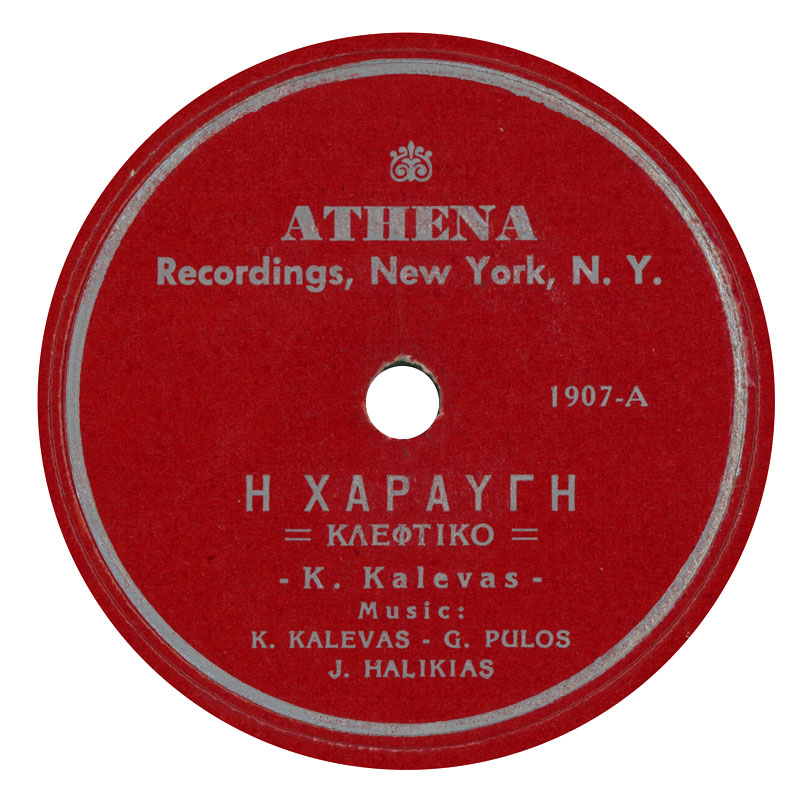
Here’s one of the Athena sides, never reissued, that includes his friend, Kostas Kalevas. Kalevas is presumably the singer, but was also a bouzouki player. While Halikias’ most revered records are all zembekika, the heavy 9/4 rhythm that was the backbone of rebetiko songs during the 1930s and 40s, both the songs on this record come from the demotika (folk) repertoire, rather than the urban rebetiko milieu. This song is typical of songs about shepherds, declaring his love his sweetheart and mountains. Admittedly, these recordings do not match the bouzouki virtuosity of some of Halikias’ classics, but it’s interesting to hear a bouzouki master in another context. It makes me wonder if he was merely backing up his friend. There’s also the possibility that it’s actually Kalevas playing bouzouki here, but I’m not familiar enough with his playing to make a guess.


 shellachead.com